Pig farmers in Kakamega have been placed on high alert following a suspected outbreak of African Swine Fever (ASF) in Shinyalu and Ikolomani sub-counties, prompting county authorities to intensify surveillance and warn against the movement and slaughter of pigs in affected areas.
In a public alert issued on Friday, the County Government of Kakamega said veterinary surveillance teams had received reports of pigs dying in unusually high numbers across farms in the two sub-counties.
Preliminary investigations indicate the disease could be African Swine Fever, a highly contagious viral disease that affects domestic pigs and wild boars and can kill entire herds within a short period.
County Executive Committee Member for Agriculture, Livestock, Fisheries and Cooperatives Mophat Mandela urged farmers and traders to cooperate with veterinary officers as investigations continue.
"We are urging all stakeholders to remain vigilant and work closely with veterinary authorities to safeguard the county's pig industry and livelihoods," Mandela said in the advisory.
He said veterinary officers had already intensified disease surveillance and farmer sensitisation programmes in the affected areas and were collecting samples for laboratory analysis to confirm the disease.
"Further control measures, including movement restrictions and quarantine, may be implemented where necessary to prevent further spread," he added.
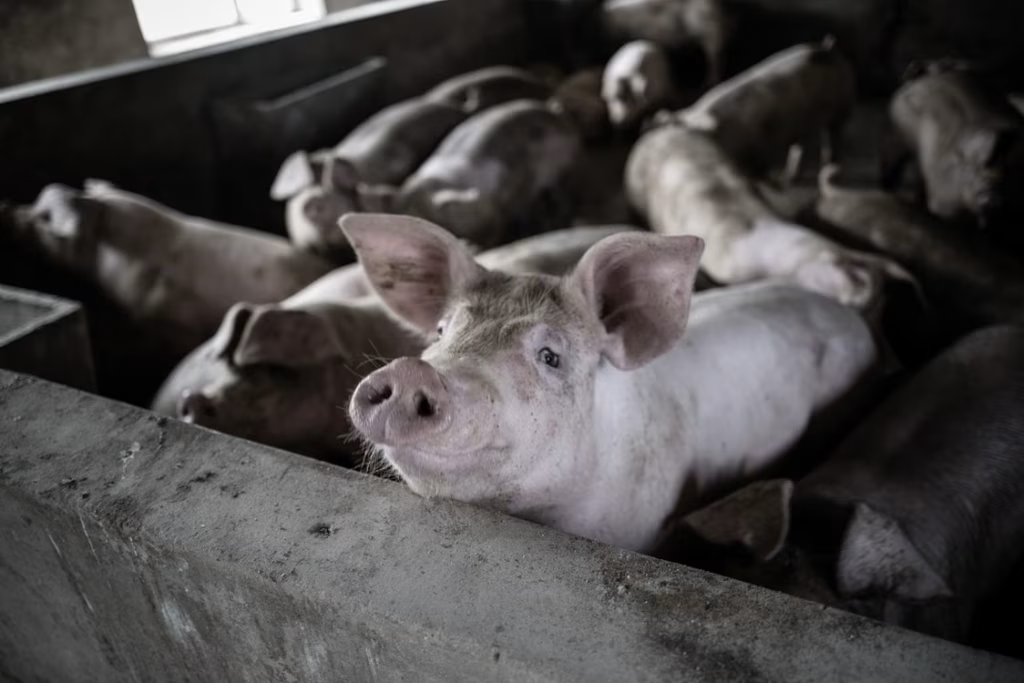
According to the county alert, affected pigs have shown symptoms including high fever, loss of appetite, lethargy, skin reddening and bluish discolouration of the ears and snout, haemorrhaging, respiratory distress, diarrhoea, abortions in pregnant sows and sudden deaths.
Mandela advised farmers to strengthen biosecurity measures, avoid unnecessary movement of pigs between farms and markets and immediately report any unusual illnesses or deaths to veterinary officers.
He further warned against slaughtering, transporting, selling or consuming pigs that are sick or that have died from unknown causes.
Although the disease spreads rapidly among pigs and wild boars, veterinary experts emphasise that African Swine Fever does not infect humans and therefore poses no direct public health risk.
Its effects, however, can be devastating economically, particularly for smallholder farmers, traders, transporters, butchers and other players in the pork value chain.
Ironically, the disease threatening pig farmers in Kakamega was first identified in Kenya more than a century ago.
African Swine Fever was first scientifically described in 1921 by British veterinarian Robert Eustace Montgomery after investigating a mysterious disease affecting pigs in what was then the British East Africa Protectorate, present-day Kenya.
Researchers later established that the virus had been circulating in East Africa long before its discovery, maintained naturally among warthogs and soft ticks, which carry the virus without becoming ill.
Domestic pigs, however, are highly susceptible and often suffer severe disease and death once infected.
From its East African origins, the virus eventually spread to Europe, Asia and the Caribbean, becoming one of the world's most economically significant livestock diseases.
More than 100 years after it was first documented in Kenya, there remains no cure for African Swine Fever and control efforts continue to rely heavily on strict biosecurity and movement controls.
For farmers in Shinyalu and Ikolomani, veterinary officers say early reporting and cooperation with disease control measures could make the difference between containing the outbreak and watching it spread across one of western Kenya's important pig-producing regions.